7 Beginner Crochet Mistakes and How to Fix Them
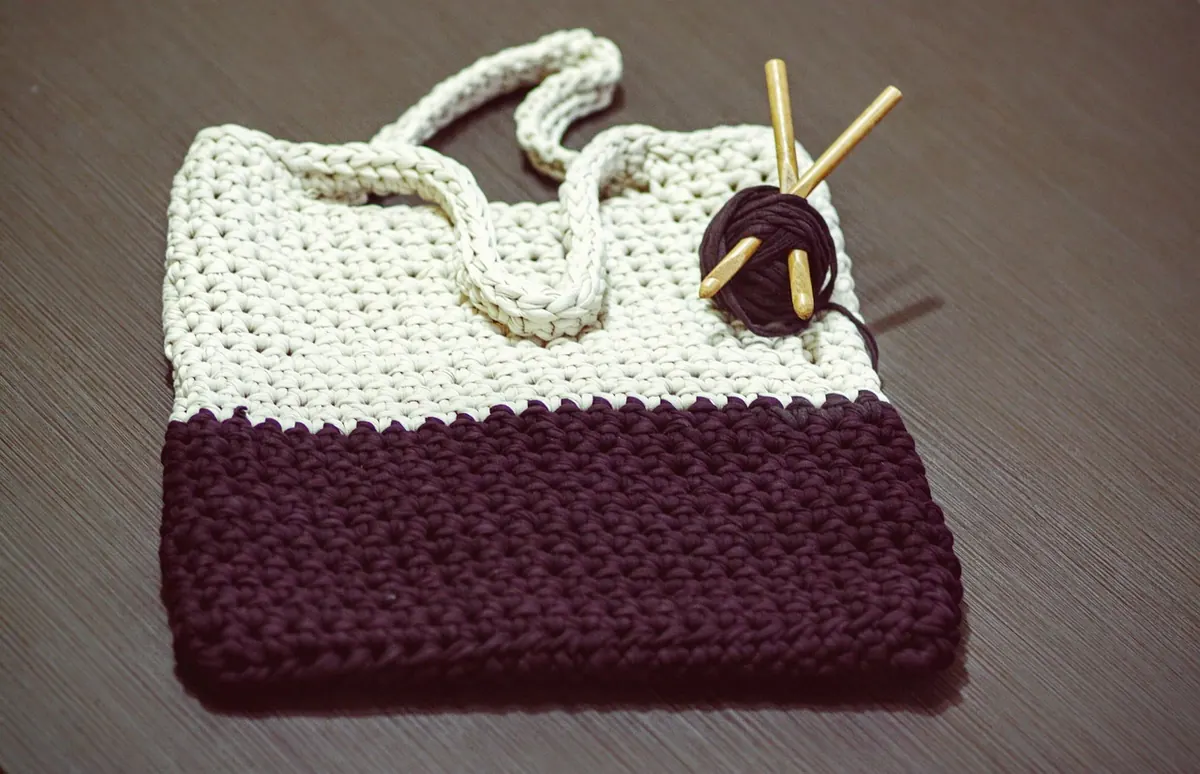
Crochet has a reputation as the calmest of crafts. Then you finish your first square and it looks less like a square and more like a kite. Here's the good news: almost every problem a beginner runs into comes from a handful of habits, and each one has a fix you can try tonight. None of it means you're bad at this. It means your hands are still learning a motion your brain already understands.
Uneven Tension: The Fix Isn't "Hold It Tighter"
Look at your fabric and it will tell you what happened. Stiff as cardboard means you're pulling the yarn too hard. Loose, loopy, and full of gaps means the opposite. Most beginners swing between both because their grip changes stitch to stitch, especially when they're concentrating.
What matters is consistency, not force. Pick one way to hold the working yarn — over the index finger and under the middle, around the pinky, whatever feels natural — and use that same path every single stitch. If you hold the yarn differently on stitch four than you did on stitch three, you'll see it in the fabric.
Small adjustments that even things out
- Pull several yards of yarn off the ball before you start a row so you aren't dragging the whole skein with every stitch.
- Check the loop sitting on your hook. It should slide easily along the shaft but not fall off. That's your tension gauge in real time.
- Drop your shoulders. Unclench your jaw. Check whether you're gripping the hook hard enough to leave a dent in your finger — if so, ease off.
- Relax your grip on the hook itself. The yarn hand controls tension; the hook hand mostly just steers.
If your hands or wrists ache after a session, take breaks and stretch. Crochet is repetitive, and persistent pain is worth mentioning to a healthcare professional rather than working through.
You Keep Losing Count of Your Stitches
The count drifts because you're counting at the wrong moment. Counting at the start of a row means you're counting a chain that may or may not represent what you think it does. Count at the end of each row, while the work is flat and the stitches are easy to see.
- Finish the row.
- Count from right to left, marking every tenth stitch with a removable marker or a scrap of contrasting yarn.
- Compare the number to your pattern. Fix it now, not three rows later.
- Place markers in the first and last stitch before you turn. Those are the two stitches beginners lose most often.
One more thing: the loop on your hook is never a stitch. It doesn't count, no matter how much it looks like one.
Your Project Keeps Getting Wider or Narrower
This one is almost always an edge problem, and it's the most common complaint in any beginner group.
Fabric that grows means you're adding stitches. The usual culprit is working into the turning chain and the first real stitch, which gives you one extra. Fabric that shrinks means you're skipping the first stitch of the row or missing the last one entirely, because the final stitch of a row often sits sideways and doesn't announce itself.
The test: chain 21, then work 10 rows of 20 single crochet. Count at the end of every row. If the number stays at 20, you've solved it. If it wanders, the markers at each end will show you exactly where the extra or missing stitch appears.
The Foundation Chain That Won't Budge
A too-tight chain makes the first row miserable — you can't get the hook in, your hands cramp, and the bottom edge of the finished piece flares out or pulls in. Two fixes, both quick.
Easy version: work your starting chain with a hook two sizes larger than the pattern calls for, then switch back to the correct hook for the first row. The chain loosens, the rest of the fabric stays the right gauge.
Better version: learn a foundation stitch, such as foundation single crochet. It builds the chain and the first row in one pass, stretches with the fabric, and removes the tight-edge problem permanently. It takes twenty minutes to learn and saves you hours over a year of projects.
Your Edges Look Ragged
Wobbly edges come from two sources: inconsistent turning chains and inconsistent first stitches. Both are fixable.
Turn your work the same direction every time. Most people turn counterclockwise and it genuinely produces a neater edge than switching back and forth at random. Keep the turning chain the same height as the stitch it represents, and be honest about whether your pattern wants you to count it as a stitch or not — the two styles are not interchangeable, and mixing them mid-project creates a staircase.
When you weave in ends, leave a tail of at least four inches and thread it through a few stitches in more than one direction. Short tails work their way out in the wash.
Every crocheter with tidy work has a drawer of lumpy first attempts. The difference is that they kept going.
Your Materials Are Working Against You
You can have perfect technique and still hate your results because of the yarn in your hands. For learning, choose a smooth, light-colored worsted or aran weight yarn. Light colors show stitch definition. Smooth yarn doesn't split or hide your stitches. Fuzzy, dark, or novelty yarns hide mistakes, which sounds helpful until you realize they also hide the stitches, and you can't learn what you can't see.
Pair it with a hook around 5.0 to 5.5 mm — large enough to see what you're doing, small enough to still be a real fabric. Skip thread crochet and fuzzy chenille until the basics feel automatic.
And be honest about the project. A scarf, a dishcloth, or a plain square teaches you more in a weekend than a fitted sweater will teach you in a month of frustration. Amigurumi with a 2.5 mm hook is not a beginner project, no matter how small and cute the finished object is.
A Practice Routine That Fixes Most of This
Spend fifteen minutes a night for a week on one plain square, roughly 20 stitches wide and 20 rows tall, counting at the end of every row. Same yarn, same hook, same grip. By the fourth night, your tension will have settled and your edges will have straightened out on their own, because repetition is what actually trains your hands.
Keep that first square. In a month, make another. Put them side by side and you'll see progress that's easy to miss when you're staring at the same rows every evening.
And when a row goes wrong, pull it out without ceremony. Frogging isn't failure; it's the cheapest correction available to you. Ten minutes of undoing beats an hour of trying to crochet around a mistake that will bother you every time you look at the finished piece.
Photo: 742787 / Pixabay