How to Solve a Cryptic Crossword: A Step-by-Step Starter Method
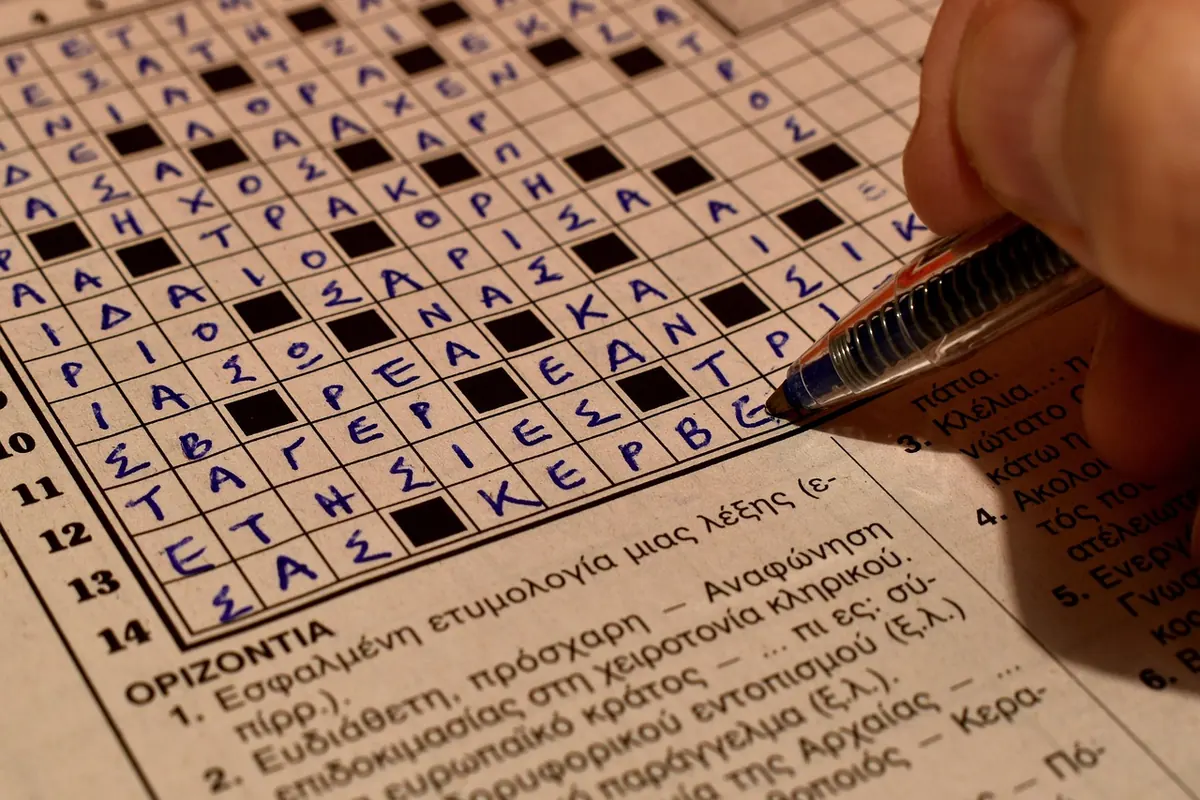
A cryptic clue can look like a sentence assembled by someone who has only just learned the language. Divine dog turned around (3) — odd grammar, odder logic, and the answer is supposed to be three letters. Here is the reassuring part: cryptics are not a test of genius or vocabulary. They are a test of pattern recognition, and pattern recognition is learnable. This method walks you through the clue types that cover most of any grid, then shows you how to solve one clue without worrying about the rest.
Why Cryptic Clues Read Like Nonsense
A good cryptic clue reads as a normal, often slightly strange sentence. That is deliberate. The setter wants your first reading to be wrong, so "flower" makes you think of a rose when it actually means a river, and "drunk" sounds like a state when it is really an instruction to rearrange letters.
Solvers call this the surface reading. Underneath it, every word has a job. Some words give the answer's meaning, some give the instruction, and a few exist only to make the sentence flow. Those filler words are why beginners feel lost. Once you start crossing out the joiners — is, for, with, a — the machinery becomes visible.
Every Clue Has Two Halves
The single most useful rule: nearly every clue contains a definition plus wordplay that produces the same answer. The definition sits at one end of the clue, usually the first or last word or two. The rest of the clue is an instruction with its raw materials attached.
Take this one:
Quiet street is an aircraft (5)
Read the ends. "Aircraft" is a solid definition and fits five letters. "Quiet street" is the strange part. Quiet, in music, is p (short for piano), and street is lane. Put p inside lane and you get PLANE. The word "is" is filler.
So your first move on any clue is to test the beginning and the end as definitions. If one end fits the crossing letters and the word count, you likely have your answer.
The Clue Types Worth Learning First
Six types cover most of a typical grid. Learn them in roughly this order.
Anagrams
Anagram clues hand you the answer's letters, shuffled. The signal is an indicator word meaning "mixed up": mashed, scrambled, wildly, broken, cooked, strange, drunk, wandering, reformed, shifting.
Mashed lemon is a fruit (5)
"Mashed" is the indicator, "lemon" supplies the letters, and MELON is the fruit. When you spot an indicator, count the letters of the nearby word. If they match the answer length, start rearranging.
Hidden Words
Some answers sit inside the clue itself, in consecutive letters. Signals include in, some of, part of, hidden, held by, to a degree.
Range hidden in orange (5)
Run your eye along "orange" and you find RANGE. These are the friendliest clues on the page. Take them the moment you see them and use their letters to unlock crossing clues.
Charades
The answer splits into two or more small words, clued in order.
Bovine lad makes a cowboy (6)
Bovine is COW, lad is BOY, so cow + boy = COWBOY. When a clue feels like a list of separate images, suspect a charade.
Containers
One short word goes inside another. Signals: in, into, around, holding, outside, enters, penning. The aircraft clue above is a container: p inside lane. Solving one is the moment most beginners realise cryptics are fair.
Reversals and Homophones
Reversals tell you to read a word backwards: back, returning, turned, raised, sent up. Divine dog turned around (3) gives GOD from dog.
Homophones tell you the answer sounds like something: we hear, reportedly, say, on the radio. Boy, we hear, is the star (3) points to SUN, because "boy" sounds like son.
Double Definitions and Small Tricks
Some clues have no wordplay at all, just two meanings sitting side by side. Bark (4) asks for a dog's bark or a tree's bark. Watch too for deletion and initial-letter tricks. Words like briefly, endlessly and almost usually mean drop a letter or two: Bird in a crowd, briefly (4) gives CROW from "crowd".
One Clue at a Time: A Worked Routine
Here is what to do with a clue that is not jumping out at you.
- Count the letters. It narrows everything before you have solved anything.
- Mark the definition. Read the first two words, then the last two, and underline whichever looks like a dictionary meaning.
- Circle any indicator word — mashed, hidden, back, we hear, in. The indicator tells you which trick to try.
- Find the fodder. It is almost always the words beside the indicator, and its letters should roughly match the answer length.
- Apply the trick and say the result out loud. If it is not a word, try another reading of the same clue. Many clues support two possible grammars.
- Check against the crossing letters before you write it in.
- Move on after a few minutes. Leave the clue, solve something else, and return with fresh crossing letters.
A Starter Routine for Your First Grid
- Start with the shortest clues. Fewer letters means fewer possibilities.
- Clear the hidden-word and double-definition clues first. They give you letters for free.
- Work in pencil and write in crossing letters as soon as you have them. Wrong guesses show themselves quickly.
- Pick one puzzle and stay with it. Switching puzzles resets all the small advantages you have built.
- Keep a running list of indicator words in a notebook, sorted by type. It becomes your personal dictionary.
- If a puzzle defeats you completely, try a different publication next time. Some setters are gentler than others.
Building Confidence, Clue by Clue
Give yourself ten minutes a day with one cryptic. Aim to solve two or three clues well rather than the whole grid badly. When you get stuck, looking up the answer is fine — but read the explanation and name the half you missed. Was it the definition, the indicator, or the trick itself? That single habit is what turns a beginner into someone who finishes the puzzle on the train.
Most of the pleasure in cryptics is not the finished grid. It is the small click when "quiet street" becomes PLANE and the sentence you have read four times suddenly makes a different kind of sense. One clue at a time is the only speed that matters.
Photo: papazachariasa / Pixabay